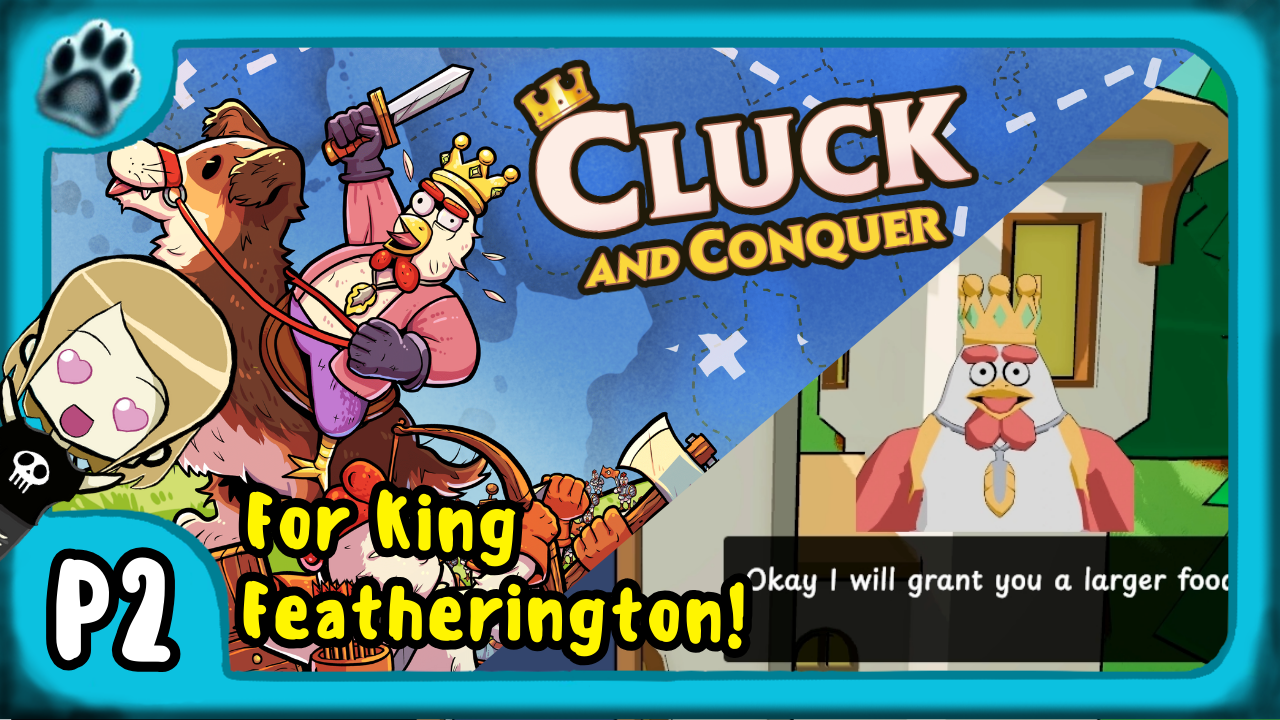
Cluck and Conquer by Soy Boy Games
Indie dev Soy Boy Games delivers a strategy experience that immediately stands out through its humor and charm. Cluck and Conquer leans fully into its absurd premise of medieval chickens waging war, and that commitment gives the game a strong identity right out of the gate. Beneath the comedy, though, is a foundation that clearly aims to support thoughtful strategy and long term progression, even if some areas still need time to mature.
Level Design
The level design centers around a rock paper scissors style combat system, which creates a learning curve that feels both approachable and engaging. It is familiar enough to understand quickly, yet deep enough to invite experimentation. Equippable talismans further enhance this depth by augmenting army stats, opening the door to a wide variety of playstyles and strategic combinations.
Even though the demo currently contains only one world, the battleground changes with each fight, which helps keep encounters visually fresh. Progression is reinforced through constant rewards in the form of resources, and players are frequently faced with the choice of playing it safe or pushing forward to risk those gains. This risk and reward loop works well. The inclusion of three difficulty options is also appreciated, allowing both casual players and those seeking a challenge to find their footing.
Storage caps on food, iron, and population add another layer of strategy, encouraging careful planning rather than mindless hoarding. These systems work together to form a solid backbone for the game’s progression.
Sound Design
The sound design effectively captures a medieval tone during battles, adding weight and energy to each encounter. Hearing different weapons produce distinct sounds when chickens attack is a fun and satisfying detail!
That said, the audio experience feels incomplete in a few key areas. There is currently no music on the title screen or in the village, which makes those spaces feel oddly quiet and less inviting. Additionally, background music sometimes plays and sometimes does not, suggesting a few polishing passes are still needed on the technical side.
Character Controller
At the moment, Cluck and Conquer supports keyboard controls only, which limits accessibility for players who prefer using a gamepad. However, movement around the screen feels fluid, and selecting units or targets is intuitive and responsive. From a mouse and keyboard perspective, interacting with the battlefield feels smooth and natural.
User Interface
The UI sports a cell shaded, cartoon inspired aesthetic that fits perfectly with the game’s playful tone. It is especially effective in the village shop, where point and click interactions feel clean and easy to navigate. During battles, the interface provides clear information about units without cluttering the screen or distracting from the action.
An options menu is present, which is always a plus in my book! I did notice an unfinished Controller tab within the menu that currently contains no options, which stands out and will likely need addressing as development continues.
Easy to Understand?
Sort of. All controls and mechanics are explained clearly, but much of that information is delivered through large blocks of text. While thorough, this approach can feel overwhelming. Integrating tutorial elements gradually into gameplay would likely make learning the systems feel more natural and less like homework.
Fun Factor
I had fun playing Cluck and Conquer! Watching armies of chickens clash on the battlefield is inherently funny, and the humor carries through the experience. Buying new units and seeing how they perform added a genuine sense of curiosity and progression that kept me engaged.
Character Design
The character design leans heavily into comedy, and it works. Each unit type is easy to identify, even from a bird’s eye view, which is crucial in a strategy game. The king stands out visually and functionally, which is fitting since he serves as the primary point of communication with the player.
Story
At present, the story revolves purely around conflict, without a defined beginning, middle, or end. Introducing even a simple narrative hook explaining why these chicken kingdoms are fighting could go a long way toward drawing players in emotionally. A short story introduction before the tutorial could add context and make the battles feel more meaningful.
Replay Value
Would I replay Cluck and Conquer? Not in its current state. There is some short term replay value in unlocking new chicken troops, but long term motivation is still lacking. Introducing rewards with lasting impact could help significantly. Optional objectives, unique unlockable units, or content that cannot be purchased with scrolls are all possibilities worth exploring.
In the future, I can see casual players being drawn in by the humor and potential story, while hardcore players may gravitate toward difficulty challenges and completionist goals. The foundation is there, but the staying power needs time to grow.
Final Thoughts
Rating: Three out of five toe beans! 🐾🐾🐾 ❌❌
Cluck and Conquer is off to a strong start, even if it still has ground to cover. Its level design shows real promise through smart roguelite mechanics and hints at deeper systems yet to be unlocked. The absurd charm of chickens battling in a medieval setting gives the game an immediate fun factor that is hard to ignore.
To truly shine, the game will need stronger replay incentives, improved accessibility for gamepad players, and a round of overall polish. Still, the war has potential to become far more than a quick skirmish. You are off to a good start, Soy Boy Games! I am looking forward to seeing where you take Cluck and Conquer next.