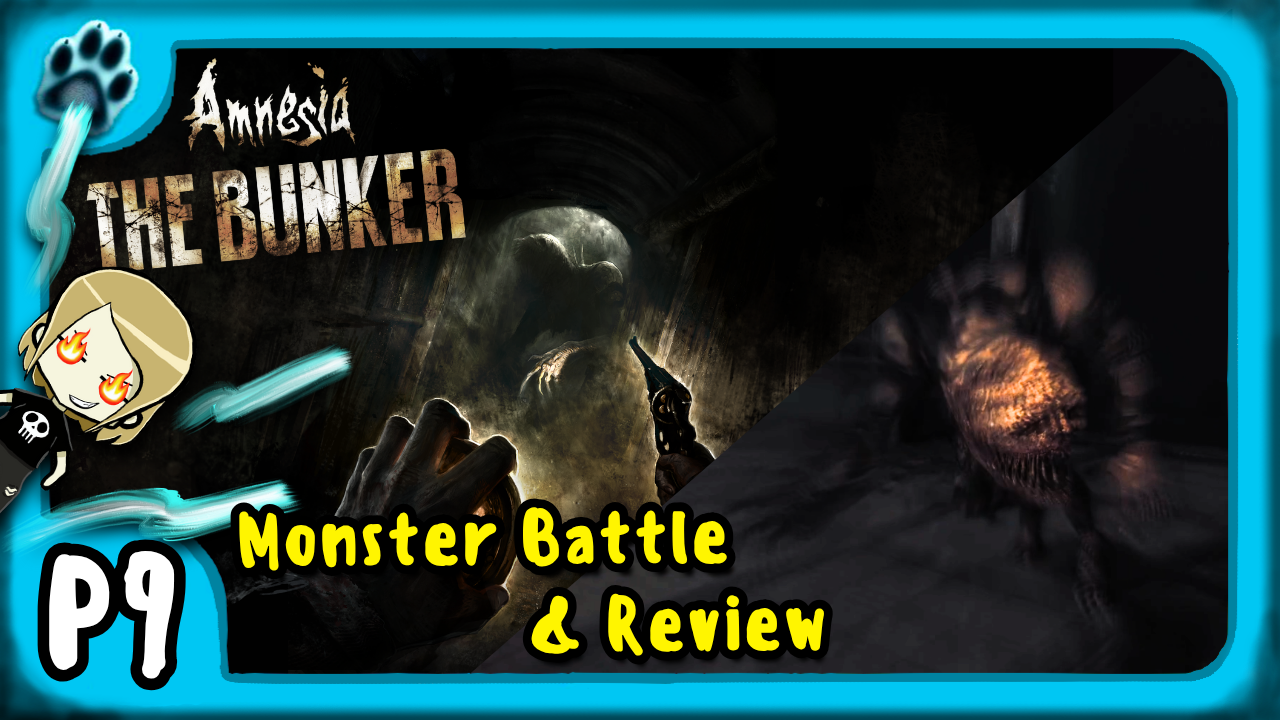
Amnesia: The Bunker by Frictional Games
Amnesia: The Bunker drops players into one of the most suffocating horror settings imaginable, a World War I bunker buried beneath the French trenches. From the moment you crawl away from the chaos of war above ground and descend into the darkness below, the game makes one thing clear: survival will come at a psychological cost. By fusing historical horror with emergent gameplay systems, Frictional Games delivers an experience that feels tense, personal, and relentlessly oppressive!
Level Design
The level design takes full advantage of the bunker setting promised by the title, while still using the outside world sparingly and effectively. The opening sequence above ground establishes the brutality of trench warfare and reframes the bunker as a place of refuge. Once you become trapped underground, that perspective flips completely. The outside world, once terrifying, becomes the symbol of freedom and escape. Throughout the game, Frictional Games teases players with fleeting glimpses of sunlight and open sky, offering just enough hope to keep pushing forward.
The bunker itself is divided into interconnected sublevels that can be explored freely. Each area introduces new mechanics and items while reinforcing the central survival loop. The Central Bunker, where the player awakens, smartly introduces the flashlight and revolver early on, giving players a fragile sense of control. Light quickly becomes a core mechanic, as illuminated areas reduce how often the monster emerges from the walls. This makes the generator, which powers the bunker lights as long as it has fuel, feel like a literal lifeline. The nearby safe room and storage chest further anchor this space as a psychological comfort zone, shaping how far players are willing to venture.
Puzzles are tightly woven into exploration and often rely on codes found on fallen soldiers’ dog tags, reinforcing the tragedy of those who came before you. Optional paths reward curiosity with useful tools like the lighter and wrench, while essential items such as boltcutters and dynamite gate progress toward escape. Environmental interactions like fire spreading through gas, explosions altering paths, and light affecting enemy behavior create a sandbox of survival horror systems that reward experimentation without ever feeling safe.
Sound Design
The sound design is one of the strongest pillars of Amnesia: The Bunker. Nearly every action has an accompanying sound effect, including the subtle scrape of moving objects, which heightens immersion constantly. The main menu immediately sets a foreboding tone with its eerie theme, but once inside the bunker, music takes a backseat to ambience.
Sound itself becomes a mechanic. Loud actions such as triggering traps or firing a weapon can summon the monster, instantly filling the player with dread. Even something as small as attacking a rat feels risky. At the same time, sound can guide and protect the player. Radios, environmental cues, and enemy noises provide crucial information for navigation and survival. The balance between silence and sudden noise keeps tension consistently high and makes every decision feel dangerous.
Character Controller
The character controller supports both keyboard and gamepad, offering solid accessibility. Movement includes running, crouching, jumping, leaning, aiming, and throwing items, but every action carries weight due to its impact on noise. Moving quickly is tempting, but it is rarely wise.
Interacting with objects feels tactile and grounded, allowing players to pick up, rotate, and reposition items in the environment. The flashlight, an essential tool, introduces an excellent risk-reward mechanic by requiring manual winding. This not only fits the historical setting but also forces players to choose between visibility and silence, a decision that never stops being stressful.
User Interface
The UI reinforces the World War I aesthetic beautifully. Menus and inventory screens resemble documents pulled from a leather satchel, complete with typewriter-style fonts. Even the loading screen, depicted as slowly growing barbed wire, ties directly into the setting. There’s an options menu, which is always a plus for player agency!
Tutorial hints appear subtly during the introduction, and the familiar Amnesia interaction icons return to indicate usable objects. One of the most effective UI elements is the visual distortion that occurs when looking at the monster directly. The blurred, doubled vision obscures the creature’s true form and deepens the fear of the unknown, making encounters far more unsettling than a clear reveal ever could.
Easy to Understand?
Yes! The introductory sequence functions as an optional tutorial, teaching mechanics organically while advancing the narrative. Accessibility options allow players to tailor the experience, including a Very Easy difficulty mode for those who want to focus more on atmosphere than survival pressure. Lighting design guides players toward critical objectives early on, while notes, photos, and a bunker map with marked points of interest help orient exploration without breaking immersion.
Fun Factor
I had a blast playing Amnesia: The Bunker! Solving puzzles under constant threat and learning how to survive the monster kept me fully engaged. Piecing together how this entry connects to the broader Amnesia lore added an extra layer of intrigue that made exploration feel even more rewarding.
Character Design
The character designs strike a balance between realism and horror. The French soldiers all share the iconic blue uniforms of the era while still appearing distinct. The mutated rats are grotesque and immediately threatening, serving as effective environmental hazards. The monster itself, usually obscured by visual distortion, moves in an unsettling, animalistic way while retaining hints of humanity. This uncanny design makes it far more frightening than a clearly defined creature.
Human characters like Henri Clement and Augustin Lament are developed through cutscenes, notes, and environmental storytelling. Their friendship is believable and emotionally grounded, making the tragedy that unfolds hit much harder. The scattered photos and spoken notes deepen this bond and humanize the horror.
Story
The story embodies the idea that war itself is a form of horror. Henri escapes the trenches only to find himself trapped in an even darker nightmare. As with previous Amnesia titles, the truth is uncovered gradually through notes and environmental clues. Players who choose to engage deeply with these elements are rewarded with a haunting narrative that ties into the series’ larger lore.
The revelation that Augustin, Henri’s closest ally, becomes the monster stalking the bunker is devastating. It reframes every encounter as a tragic confrontation rather than a simple fight for survival. The ending reinforces this bleak worldview. Even escape offers no true freedom, as Henri emerges from one hell only to face another at the hands of enemy forces.
Replay Value
Would I replay Amnesia: The Bunker? Absolutely! There is strong replay value for both casual and hardcore players. Multiple difficulty modes, New Game Plus options, community-made custom stories, and randomized elements like item placement and code combinations ensure that no two runs feel the same. Advanced settings allow players to tweak mechanics such as monster behavior and save conditions, offering near endless ways to experience the game.
Final Thoughts
Rating: Five out of five toe beans! 🐾🐾🐾🐾🐾
Amnesia: The Bunker is a masterclass in survival horror design, blending historical tragedy with emergent gameplay systems that constantly test the player’s nerves. Its tightly designed environment, reactive monster AI, and smart use of sound and light create an experience that feels both terrifying and deeply human. The story’s emotional weight lingers long after the credits roll, making this one of the most memorable entries in the series!
Frictional Games has crafted a horrific piece of historical fiction that stands out even within its own legacy. With strong replay value, thoughtful accessibility options, and a setting rarely explored in horror games, Amnesia: The Bunker is a chilling reminder that some wars never truly end.